
Four Common Plumbing Problems (With Solutions!)
From pesky leaks to stubborn clogs, uncover the most common plumbing problems and learn practical solutions to keep your system running smoothly.
Why is that awful dead fish smell coming from the garbage disposal? That’s a place no one wants to smell bad odors. You’ll want to get rid of that stink ASAP!
Our kitchens have many modern conveniences that help us spend less time doing chores and more time enjoying life. One of those conveniences is the garbage disposal. It helps break down food scraps, keeps waste moving through your plumbing system, and can reduce the likelihood of kitchen sink clogs. However, because it regularly comes into contact with food particles, grease, and moisture, it can also become a source of unpleasant odors if it is not cleaned occasionally.
It is important to know how to clean your garbage disposal, get rid of bad smells, and help prevent those odors from returning in the future.
In many cases, a combination of grease, soap scum, food particles, and other organic debris contributes to the horrendous dead fish smell coming from a garbage disposal. If you are not using enough water while running the disposal, food waste may not completely flush through the system. Over time, grease and food residue can accumulate inside the disposal chamber and drain line. As this material begins to break down, it can create strong odors that spread throughout your kitchen.
Sometimes the smell is not actually coming from the disposal blades themselves. Food debris can collect underneath the rubber splash guard at the top of the disposal, where it is often overlooked during routine cleaning. This hidden buildup can create surprisingly strong odors.
Food scraps or a small object caught in the disposal can contribute to odors and keep water from draining freely. Before checking the opening, disconnect power to the disposal. Unplug it if it has a plug, or turn off its circuit breaker if it is hardwired. Never put your hand inside the disposal, even when the power is off.
Shine a flashlight into the opening. If you can see trapped debris, carefully lift it out with long-handled tongs or pliers. Do not force a tool into the disposal or try to remove anything you cannot clearly see and reach.
Once the opening is clear, restore power. Turn on a steady stream of cold water, then switch on the disposal and let it run briefly to flush away loose particles. Turn the disposal off first, and leave the water running for a few more seconds to help clear the drain line.
If the disposal hums but does not turn, switch it off rather than continuing to run it. If water still drains slowly after you remove visible debris, the clog may be farther down the drain.
To clean your disposal, place a plug in the disposal drain and fill the sink with three to four inches of warm water. Add two teaspoons of liquid dish soap and swish the water around to create suds. Remove the plug and allow the soapy water to drain while the garbage disposal is running. This helps wash away grease and residue that may be clinging to the interior surfaces.
It is also a good idea to clean the areas that commonly trap food particles and contribute to odors. Apply liquid dish soap to a dish brush and scrub the accessible parts of the disposal, including the sink basin and the underside of the rubber splash guard. This area is often responsible for lingering smells and is frequently missed during routine cleaning.
To help keep your disposal clean and fresh, try grinding a handful of ice cubes occasionally. The ice can help dislodge buildup from the inside of the disposal chamber. Some homeowners also grind small pieces of citrus peel or an apple to leave behind a fresher scent.
It is also a good habit to run cold water before, during, and after using the disposal. This helps move food particles through the system and reduces the chance of buildup developing inside the unit.
If you try all of the steps above and still notice odors coming from your sink, there may be a more significant clog somewhere in the drain system. In some cases, the smell can be related to buildup deeper in the pipes that requires professional drain cleaning.
Keep the stinky dead fish odor out of your kitchen by removing clogs, cleaning your garbage disposal regularly, and taking a few simple steps to prevent odors from returning. Michael’s Plumbing is your Central Florida plumbing expert. Our local clog clearing experts are ready to help. Call us at (407) 219-9772 or contact us online.
Food scraps and grease can collect inside the disposal or beneath the rubber splash guard. As that residue breaks down, it can produce a strong odor even when the sink appears clean. Start by cleaning the splash guard and flushing the disposal as described above.
Turn off and disconnect power to the disposal first. If the splash guard is removable, take it out and wash both sides with dish soap and warm water. If it does not come out, use a long-handled dish brush to scrub its underside and the accessible area around the drain opening. Never put your hand into the disposal chamber.
Avoid using bleach or chemical drain cleaners in the disposal. Cleaning the splash guard and flushing the unit with soapy water are better first steps. If the sink is draining slowly or the odor persists, the drain may need professional attention.
Cleaning may remove the odor from the disposal while leaving food residue in the splash guard or drain line. Check the underside of the guard, and run cold water before and during disposal use and for a few seconds after turning it off. Avoid sending grease or fat down the drain.
If you have cleaned the disposal and splash guard but the odor keeps returning, especially if the sink also drains slowly or backs up, buildup or a clog farther down the drain may be the cause. A plumber can inspect the drain and determine whether it needs cleaning.
Back to Blog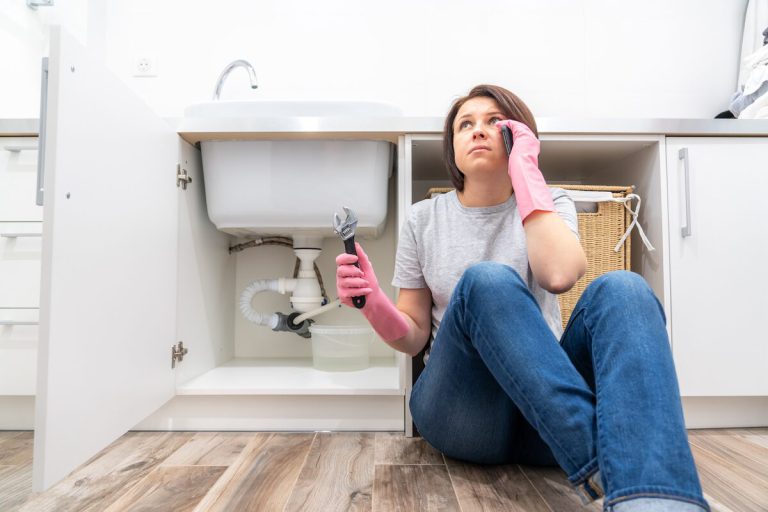
From pesky leaks to stubborn clogs, uncover the most common plumbing problems and learn practical solutions to keep your system running smoothly.
Is your home in need of a fresh start? Discover the signs indicating it’s time for a plumbing overhaul!
Discovering a water leak isn’t always straightforward. Here are five subtle signs that could indicate a hidden issue in your home!
Our licensed plumbers and friendly team always answer the call. To ask a question or request service, fill out our contact form or just give us a call at 407-219-9772.